
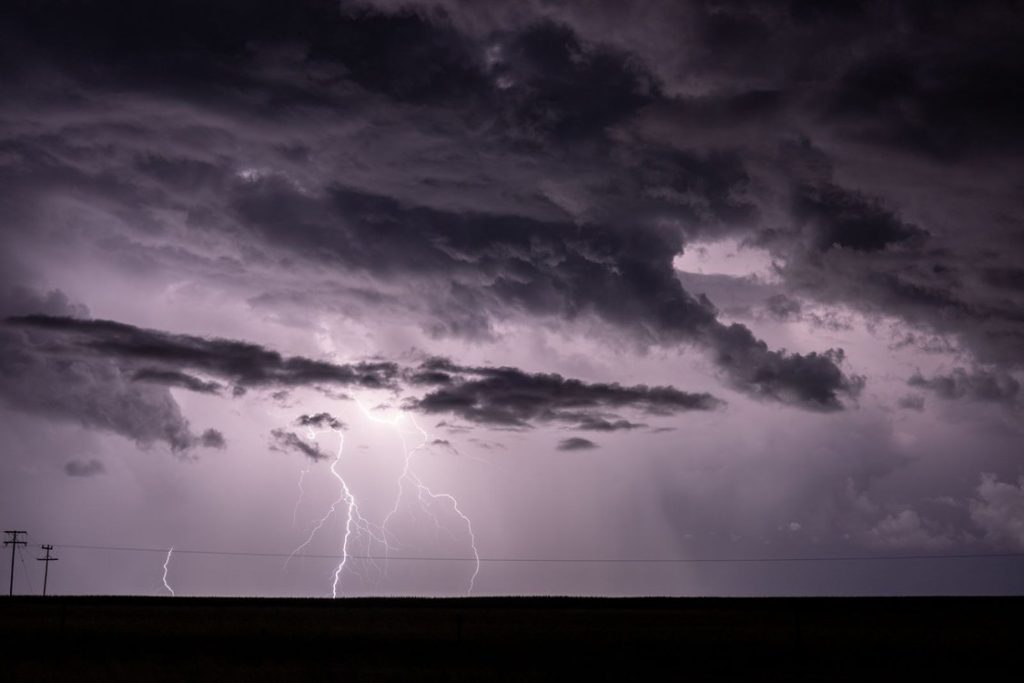
Your phone buzzes with a thunderstorm alert and two words do all the work: watch, or warning. Most people read them as the same thing at different volumes. They are not. One of them means get ready sometime today. The other means get inside now. Almost everything useful in thunderstorm news hangs on that difference, so that is where this guide starts, before the causes, the safety steps and the places worth following for live updates.
Key Points
- Watch means be prepared; warning means take action. A watch covers a large area for hours, while a warning covers a small area for an hour or less.
- A storm is severe at 58 mph winds, one-inch hail, or a tornado. Lightning and heavy rain alone do not make it severe.
- When thunder roars, go indoors. Stay inside until 30 minutes after the last thunder.
- Never drive through flooded roads. Turn around, do not drown: six inches of moving water can knock you down and one foot can carry a car away.
- The official warning outranks news headlines. Use the news to notice, and the official warning to decide.
In This Guide
- Watch or Warning? The Two Words That Matter Most
- What Actually Causes a Thunderstorm
- How Thunderstorm Alerts Reach You
- Safety at Home
- Safety on the Road
- Safety Outdoors
- Where to Follow Thunderstorm News and Live Updates
- What Thunderstorm News Coverage Gets Right, and Where It Falls Short
- Frequently Asked Questions
- The Short Version
Watch or Warning? The Two Words That Matter Most
The National Weather Service, the official weather service of the United States, sums the pair up in four words each. A watch means be prepared. A warning means take action.
A severe thunderstorm watch says severe storms are possible in and near the watch area. It usually covers a big map, often several counties or parts of more than one state, and it runs for hours, typically three to eight. Nothing severe has been confirmed yet. The Storm Prediction Center in Norman, Oklahoma issues watches after watching the atmosphere build toward trouble, sometimes days ahead through its outlooks. When a watch is posted for your area, the useful moves are boring ones: check the forecast again, charge your phone, bring loose things in from the balcony or yard, and know which room you would sit in if the weather turned.
A severe thunderstorm warning is smaller, shorter and much more serious. Your local weather office issues it when radar shows a severe storm, or trained spotters report one on the ground. It covers a tight area drawn around the storm itself, often the size of a city or a small county, and it usually lasts an hour or less. The official wording is blunt: warnings indicate imminent danger to life and property. If a warning names your area, you stop what you are doing and move into a substantial building, away from windows. Mobile homes are not safe shelter in the winds a warning is talking about.
Readers in India meet the same ladder in different clothes. The India Meteorological Department (IMD) issues colour coded alerts, yellow for be aware, orange for be prepared and red for take action, and state and city administrations add advisories of their own. Different labels, same habit worth building: find the level, not just the headline, before you decide how much to worry.
What Actually Causes a Thunderstorm
Every thunderstorm starts with the same three ingredients: moisture low in the air, warm air that wants to rise, and something to give that air a push, usually daytime heat or an arriving weather front. The rising air cools, its moisture condenses, and a cumulonimbus cloud builds, the tall dark tower with the flattened top you see over summer fields. Air racing up and down inside that cloud separates electrical charge until it discharges as lightning. The thunder is the sound of air heated and expanded by the bolt.
A single storm cell often lives less than an hour. A line of cells can keep rebuilding for an evening, which is how one stormy night delivers three separate downpours.
Here is the part most thunderstorm news coverage skips: not every loud storm counts as severe. NOAA and the National Weather Service use hard numbers. A thunderstorm is classed as severe when it produces at least one of these: wind gusts of 58 mph (about 93 km/h) or more, hail one inch across or larger (roughly the size of a quarter coin), or a tornado. Lightning, heavy rain and dramatic thunder do not make a storm severe on their own. Since 2021, warnings in the US also carry a damage threat tag. A warning tagged considerable means winds near 70 mph or golf ball sized hail. One tagged destructive means winds of 80 mph or more, or hail the size of a baseball, and those are the warnings that trigger the loud emergency alerts on mobile phones. If you read one line of any thunderstorm warning, read the tag and the numbers.

How Thunderstorm Alerts Reach You
The chain is shorter than people think. Forecasters at the Storm Prediction Center flag risk areas in outlooks up to a week out. As the threat firms up, a watch is issued for the region. When a specific storm crosses the severe line on radar or in spotter reports, the local forecast office draws a warning around that storm and pushes it out through weather apps, broadcasters, NOAA Weather Radio and, for the destructive category, direct phone alerts.
Thunderstorm news sites sit at the end of that chain, not the start. A thunderstorm news report can tell you quickly that a warning exists and what it has done so far, but the full detail, the exact districts or counties, the start and end times, the wind and hail numbers, always lives in the warning itself. That is why the practical rule is simple: use the news to notice, use the official warning to decide.
Safety at Home
The official line from the National Weather Service and Ready.gov is the one to memorise: when thunder roars, go indoors. If you can hear thunder, you are close enough to be struck, because lightning can land well ahead of the rain. A sturdy building is the best shelter there is. Once inside, a few things matter more than people expect:
- Stay away from windows and doors. Damaging wind and flying debris are the everyday risk in a severe storm, not just lightning.
- Avoid running water. Do not shower, bathe or wash dishes while lightning is near. Lightning can travel through a building’s plumbing.
- Avoid anything plugged in. Keep off corded phones and wired electronics. A mobile phone is fine.
- Pick the right room. For the strongest storms, a basement or a small interior room on the lowest floor gives the best protection from wind.
- Stay in longer than feels necessary. Remain indoors until 30 minutes after the last thunder. A large share of lightning injuries happen after people decide the storm has passed.
Before storm season, the cheap preparations pay off: trim trees that hang over the roof, clear drains so heavy rain has somewhere to go, and keep a torch and a power bank where you can find them in the dark.
Safety on the Road
Driving through a storm is where good intentions go wrong, so the advice is specific. If a warning is issued while you are travelling and you can reach a sturdy building, go there and wait inside. If you cannot, pull well off the road, away from trees and power lines that could fall, and stay in a hard topped car with the windows up. A car protects you from lightning; it does not protect you from water.
That is the second rule, and emergency managers repeat it word for word: turn around, do not drown. Never drive, walk or wade through flooded roads. Six inches of fast moving water can knock an adult off their feet, and one foot of moving water can sweep a car away. Floodwater also hides what it has done to the road, and the surface under it may already be washed out. Most flood deaths in storms happen in vehicles, usually within sight of the far side.
Safety Outdoors
There is no safe place outside in a thunderstorm. Outdoor advice is the part of thunderstorm news people most often skip, and it is the part that matters fastest. There are only less bad options out there, and knowing that difference is the honest version of the advice. If you are caught away from buildings, stay away from isolated trees, hilltops, open fields, metal fences and water, because lightning looks for the tallest and most conductive thing around. Get off boats and out of pools and lakes at the first sound of thunder, not when the rain starts. If a group is caught outside, spread out rather than huddling together.
If lightning is striking close and there is genuinely nowhere to go, crouching low with your feet together reduces your contact with the ground, but treat that as a last resort, not a plan. The plan is the 30 minute rule in reverse: the moment a sky looks like building a storm, start moving toward a real building, and do not head back out until half an hour after the last thunder.
Where to Follow Thunderstorm News and Live Updates
A reliable setup uses two layers, and takes about a minute to arrange.
The official source first. In the US that is the National Weather Service at weather.gov, whose storm warning pages carry the watch and warning text itself. In India it is the IMD, whose colour coded district alerts are what every other report is based on. Whichever country you are in, your national weather service is the only source with the full warning, and its wording outranks every summary of it.
A news topic page second. Major outlets keep standing thunderstorm news pages that gather warnings, advisories and aftermath reporting in one feed. The NDTV thunderstorm alert topic page and the WION thunderstorm tag page are both live examples, useful for local impact, official advisories and what a storm actually did. Use them for context, then check any active warning on the official service before acting on it.
One habit ties it together: check the forecast for the specific district or county you will be in, not just the nearest big city. Thunderstorms are local. One end of a city can take a destructive burst of wind while the other end stays dry.
What Thunderstorm News Coverage Gets Right, and Where It Falls Short
To be fair to the coverage: warnings now travel fast, a phone can carry a life saving alert further in a minute than a radio bulletin once did in an hour, and radar imagery in news reports makes an abstract warning concrete. Topic pages that collect warnings, safety advice and damage reports in one place genuinely help during a long stormy spell.
The gaps are worth knowing too. Headlines usually describe a whole region while the danger sits in a few districts, and the story you find first in search may be from a previous storm entirely, so check the date on every thunderstorm news story before sharing it. Coverage also chases drama, which means spectacular hail gets the cameras while lightning, the quieter and deadlier hazard in many countries, gets a line at the end. Read the coverage for awareness, and read the warning for instructions.
Frequently Asked Questions
What is the difference between a thunderstorm watch and a warning?
A watch means be prepared: severe storms are possible over a large area during the next few hours. A warning means take action: a severe storm has been spotted on radar or reported, it covers a small area for an hour or less, and you should be inside a substantial building.
What makes a thunderstorm severe?
Officially, numbers: wind gusts of 58 mph or more, hail one inch across or larger, or a tornado. Lightning and heavy rain alone do not qualify, however dramatic they look. Stronger warnings are tagged considerable or destructive when winds reach about 70 or 80 mph.
How long should you stay indoors after a thunderstorm?
Until 30 minutes after the last sound of thunder. Leaving as soon as the rain eases is the classic mistake, because lightning can still strike from a storm that seems to have moved on.
Is it safe to drive through a flooded road if the water looks shallow?
No. Six inches of moving water can knock you down and one foot can carry a car away, and you cannot see whether the road underneath is intact. Turn around and find another route. That advice, from Ready.gov and emergency managers, exists because vehicle flood deaths are so common.
Can you use a mobile phone during a thunderstorm?
Yes. A mobile phone is safe indoors. The things to avoid are corded landline phones, anything plugged into a wall outlet, and contact with plumbing and running water, because lightning can travel through a building’s wiring and pipes.
The Short Version
Thunderstorm news is worth following for one reason: it converts a surprise into a decision you have already made. Know the two alert words, respect the numbers that make a storm severe, and let the official warning, not the loudest headline, tell you when to stay in, stay off the road and wait the extra half hour. Storms pass quickly. The habits cost nothing.
Readers who found this guide useful may also like our walkthrough of Zavalio Com, a multi-topic publication that carries general news among its sections, over in Website Reviews, and more everyday guides live in our Lifestyle section.

Written by Fatima Noor
Fatima writes education, lifestyle and how-to guides for Burry Blog readers. Her focus is clear steps and practical detail: the things readers actually need to get something done.