
Most first vegetable gardens do not fail because the gardener lacked talent. They fail in the planning stage, before a single seed goes in: the plot is too big, the spot is too shady, or the money runs out at the garden centre on trays, tools and gadgets that were never needed. A vegetable garden on a budget is mostly a matter of doing a few cheap things in the right order, and skipping the expensive things that only look essential.
This guide is part of the slower, money saving side of our Lifestyle coverage, and it follows the advice of people who teach gardening for a living. Grow only what your household actually eats, and let seed packets and homemade compost do the work that glossy equipment promises to do.
Key Points
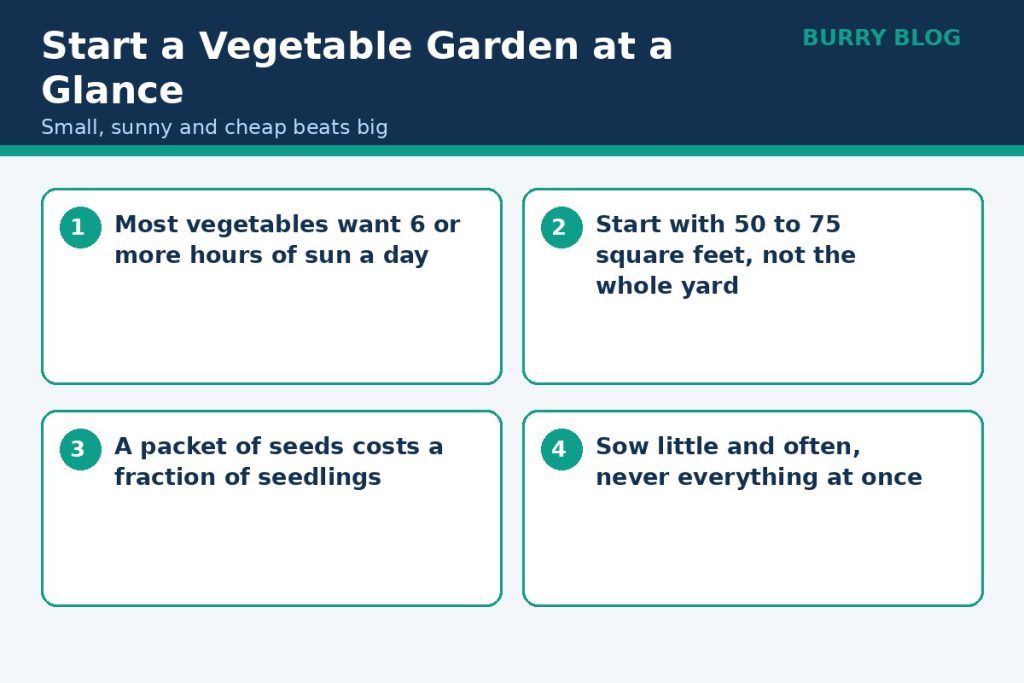
- Most vegetables need at least 6 hours of direct sun a day; watch the spot before you dig
- Start with 50 to 75 square feet, a size one person can actually look after
- A packet of seeds costs a fraction of ready grown seedlings of the same crop
- Sow little and often instead of everything at once, and harvest little and often too
In This Guide
- How to Start a Vegetable Garden by Watching the Sun First
- Start Smaller Than Your Enthusiasm Suggests
- Soil: Test It Once, Then Feed It for Free
- The Cheapest Starter Crops, and Why Each One Forgives You
- No Ground to Dig? Grow Vegetables in Containers
- Seeds or Seedlings: The Money Math
- Watering: A Rhythm, Not a Reaction
- Three Mistakes That Kill First Gardens
- Frequently Asked Questions
How to Start a Vegetable Garden by Watching the Sun First
Sunlight decides what you can grow more firmly than money, soil or enthusiasm. The Old Farmer’s Almanac puts the floor at six hours of direct sun a day for most vegetables, and sun lovers like tomatoes and peppers want as much light as they can get. Leafy greens such as lettuce and spinach are the forgiving exception and will manage in a partly shaded corner, which is worth knowing if your only space has a fence or a tree in the way.
Before you mark out a bed, watch the spot across a whole day. A patch that is sunny at breakfast can sit in a building’s shadow by mid afternoon, and that second half of the day is where the growing hours live. The University of Maryland Extension adds three practical checks: level ground, so water spreads evenly instead of pooling at one end; distance from trees and shrubs, whose roots and shade compete with your crops; and easy access to water, because a long carry from the tap means a garden that gets watered less in a hot week. Close to the house is not laziness. It is how a garden gets checked daily, and daily checks are what catch problems while they are still small.
Start Smaller Than Your Enthusiasm Suggests
Every beginner guide worth reading says the same unfashionable thing: start small. Maryland Extension suggests 50 to 75 square feet as a good starter size, roughly one modest bed or a small plot, and the Almanac’s beginner plans work on a similar scale. That is enough ground for five or six crops in useful quantities, and it is a size one person can weed, water and harvest in short sessions after work.
The reason is not modesty, it is arithmetic. A big plot does not fail all at once. It fails in week seven, when the weeds are knee high, the watering takes an hour, and the gardener quietly stops going out there. A small garden that gets finished is worth ten times a grand one that gets abandoned, and you can always extend a bed next season with the confidence of someone who has already harvested a full year from a small one. Small vegetable garden ideas all share this shape: one bed, a few crops you love, and room to expand later.
Soil: Test It Once, Then Feed It for Free
Soil is where beginners overspend fastest, usually on bags of products bought before anyone asked what the ground actually needed. The cheap sequence starts with a test. Maryland Extension recommends having your soil tested for nutrient levels and acidity, and many local extension offices offer this for a small fee or free. One test tells you whether your soil is too acidic, short of a specific nutrient, or fine as it is, and it can save you from buying fertiliser your garden never needed.
After the test, the main job is organic matter, and organic matter is the one garden input that can genuinely cost nothing. Spread at least two inches of compost over bare ground and dig it in, as Maryland Extension advises, or, if you are starting on lawn, lay cardboard or newspaper over the grass and cover it with a few inches of compost to smother it, rather than paying to strip turf. A simple compost heap of kitchen scraps, grass clippings and fallen leaves starts producing that compost for free within a season, which is why the RHS counts homemade compost among the biggest savings a grower can make. One warning from the Almanac is worth repeating exactly in spirit: never use fresh manure. It can carry pathogens and burn young roots. Compost it first, or skip it entirely.
The Cheapest Starter Crops, and Why Each One Forgives You
Choose crops the way Maryland Extension suggests: things you like to eat, things that are expensive to buy, and things with a reputation for being easy. Herbs and salad leaves score on price, since shop bought herbs cost a lot for a few grams. Quick crops score on morale, because a radish ready in about a month teaches you the whole cycle while the slow crops are still thinking about it. One plant of zucchini is a standing lesson in restraint: it produces so heavily that two plants can outgrow a small family’s appetite.
| Crop | Why it suits beginners | Seed or seedling |
|---|---|---|
| Lettuce | Fast, can be picked a few leaves at a time, tolerates some shade | Seed |
| Bush beans | Direct sown, heavy harvests, few serious pests | Seed |
| Radishes | Ready in about a month, the quickest win in the garden | Seed |
| Zucchini (summer squash) | Famously productive, one or two plants are plenty | Seed |
| Swiss chard | Keeps producing for months and shrugs off mixed weather | Seed |
| Cucumbers | Fast growing and generous once the weather warms | Seed |
| Tomatoes | The crop everyone wants, but slow to get going | Seedling |
| Peppers | Slow and warmth loving, a bought plant buys you weeks | Seedling |
No Ground to Dig? Grow Vegetables in Containers
A lack of soil is not a lack of garden. The Almanac points space short gardeners to raised beds, containers and grow bags, and even describes planting straight into bags of potting soil laid in the sunniest spot, with drainage holes poked in the bottom. Containers suit renters, balcony growers and anyone whose only sunny patch is a patio.
Two rules make containers work. First, fill them with potting mix, not soil dug from the garden: extension guidance is consistent that garden soil in a pot drains poorly and suffocates roots. Second, expect to water more often, because a pot holds a small reservoir and dries out fast in warm weather. Lettuce, herbs, peppers, bush beans and a single tomato in a large pot all grow happily in containers, and a pot can be moved a metre to chase the sun in a way a dug bed never can.
Seeds or Seedlings: The Money Math
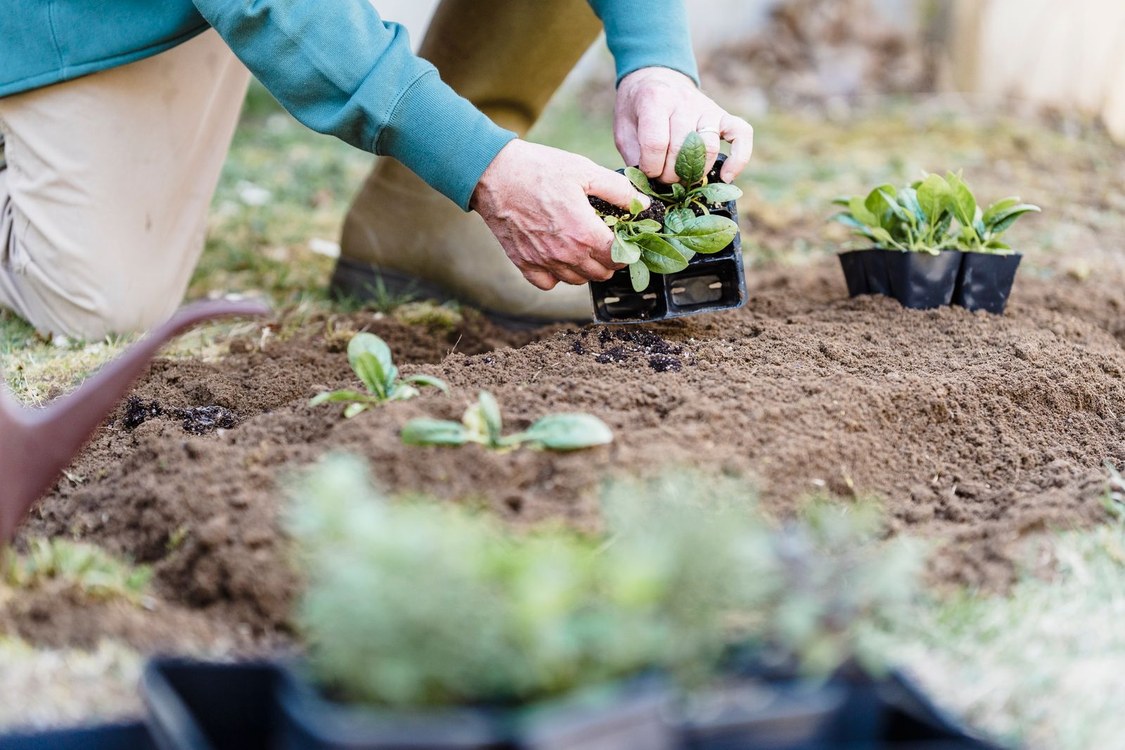
This is the section where the budget is won or lost. The RHS makes the comparison bluntly with its own example prices: a packet of 70 French bean seeds cost £4.49, while 15 ready grown plug plants of the same variety cost £11.99. One packet, in other words, holds several seasons of plants for about a third of the price of a single tray. Seeds also forgive accidents. If a late frost or a hungry mouse takes your first sowing, you simply sow again from the same packet, as the RHS notes, instead of buying a second tray.
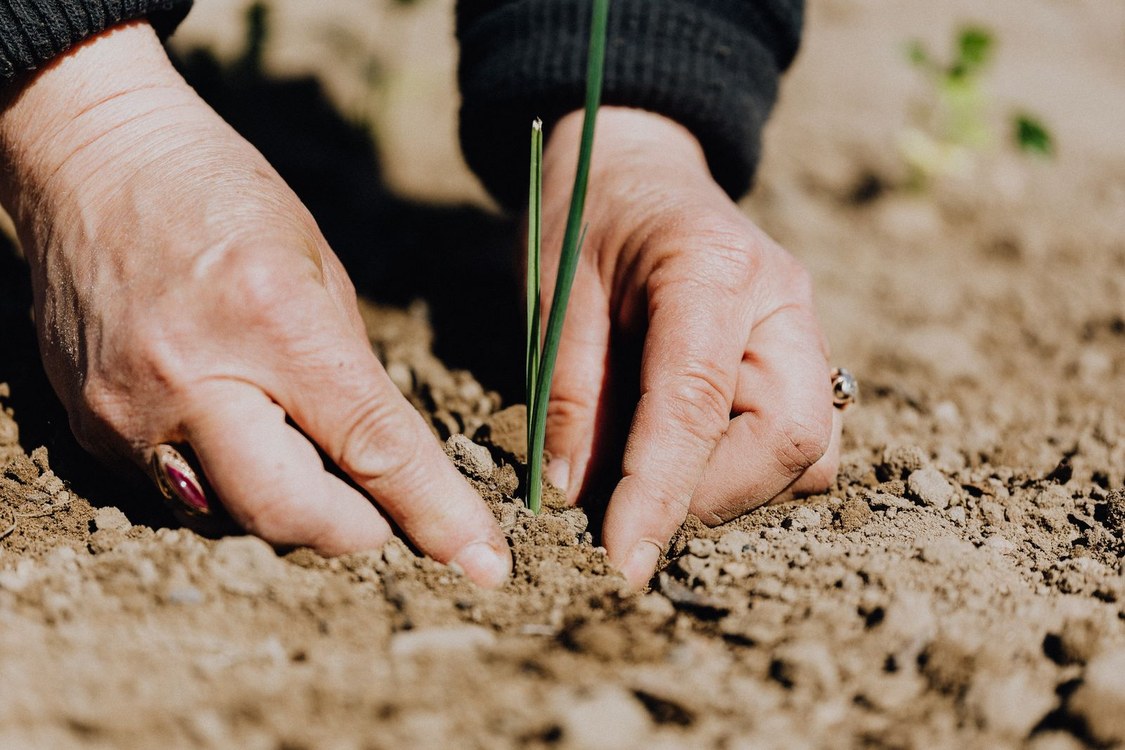
The Almanac’s split is the practical rule. Sow directly where plants will grow for lettuce, beans, carrots, beets, chard, spinach, peas, cucumbers and squash. Buy seedlings, or start seed indoors well ahead of planting out, for slow crops like tomatoes, peppers and eggplant, where a head start decides whether you harvest at all. Splitting seed packets with a neighbour or a fellow gardener cuts the cost again, since most packets hold far more seed than one small garden needs, and saving seed from your own beans and tomatoes makes next year’s start close to free.
Treat the garden the way you would treat any household saving. If you are cutting the food bill as part of a wider effort to get money under control, our guide to building an emergency fund on a small salary works on the same principle: small, regular amounts, started now, beat a big plan that never begins. A garden is that idea with leaves on it.
Watering: A Rhythm, Not a Reaction
Vegetable gardens generally need about an inch of water a week, rain included, according to standard university extension guidance. The rhythm matters more than the total. Maryland Extension draws the line clearly: newly sown seeds want frequent, light watering so the surface never dries out, while established plants do better with deep, less frequent soakings that push roots downward. A daily sprinkle mostly wets the leaves and the top centimetre of soil, and trains roots to stay shallow where the heat hits first.
Water in the morning when you can, and aim at the base of the plant rather than over the whole bed. A layer of mulch, whether straw, grass clippings or shredded leaves, holds moisture in the soil, keeps weeds down and stretches the gap between waterings, which matters in a dry spell. Containers are the exception to every relaxed rule: check them daily in warm weather, because a pot can go from fine to wilting in a single hot afternoon.
Three Mistakes That Kill First Gardens
The first is overplanting one crop. Twenty zucchini seedlings feel like thrift and turn into a burden by midsummer, when the plants produce faster than any household can eat, freeze or give away. Plant for your table, not for your optimism: a couple of plants of the heavy croppers, more only of things you eat daily.
The second is planting everything at once. Sow the whole packet of lettuce on one day and you get one glorious week of lettuce followed by none. Both the Almanac and the RHS give the same fix: stagger it. Sow a short row of fast crops every couple of weeks, and the harvest arrives as a steady supply instead of a glut. Succession sowing costs nothing and is the closest thing gardening has to a free upgrade.
The third is forgetting to harvest. Vegetables are not ornaments, and many plants read picking as an instruction to produce more. Beans, cucumbers and zucchini picked young and often keep coming; left to swell into giants, the plant decides its job is done and slows down. Walk the garden with a basket every day or two in season, because the harvest only counts if it reaches the kitchen.
Frequently Asked Questions
How much sun does a vegetable garden really need?
At least six hours of direct sun a day for most vegetables, and more is better for fruiting crops like tomatoes and peppers. Leafy greens such as lettuce and spinach are the exception and will grow in partial shade, so give them the shadier end of the plot and save the sunniest ground for the sun lovers.
When is the right time to start a vegetable garden?
Spring is the usual starting season in most climates, once the risk of hard frost has passed for the crops you are planting. Exact dates vary too much by place to print here, so check your local frost dates and your seed packets, and remember that soil temperature matters as much as the calendar for seeds sown outdoors.
How much does it cost to start a vegetable garden on a budget?
Less than most people fear. A handful of seed packets, a soil test, and compost you make yourself can start a small bed, and the RHS example shows a packet of bean seed holding dozens of plants for less than half the price of a small tray of seedlings. The expensive version of gardening is mostly bought equipment and ready grown plants, and a beginner needs very little of either.
Can I grow vegetables if I only have a balcony or patio?
Yes. Containers and grow bags on a sunny patio follow the same rules as a dug bed: six hours of sun, potting mix rather than garden soil, and more frequent watering. Start with lettuce, herbs, peppers or a single tomato in a large pot, and expand only when the first pots have earned their space.
How often should I water a new vegetable garden?
Work to roughly an inch of water a week, counting rainfall, and deliver it in deep soakings rather than daily sprinkles once plants are established. Seeds and new transplants need gentler, more frequent watering until their roots settle. When in doubt, push a finger into the soil: if it is dry a few centimetres down, it is time to water.

Written by Fatima Noor
Fatima writes education, lifestyle and how-to guides for Burry Blog readers. Her focus is clear steps and practical detail: the things readers actually need to get something done.