
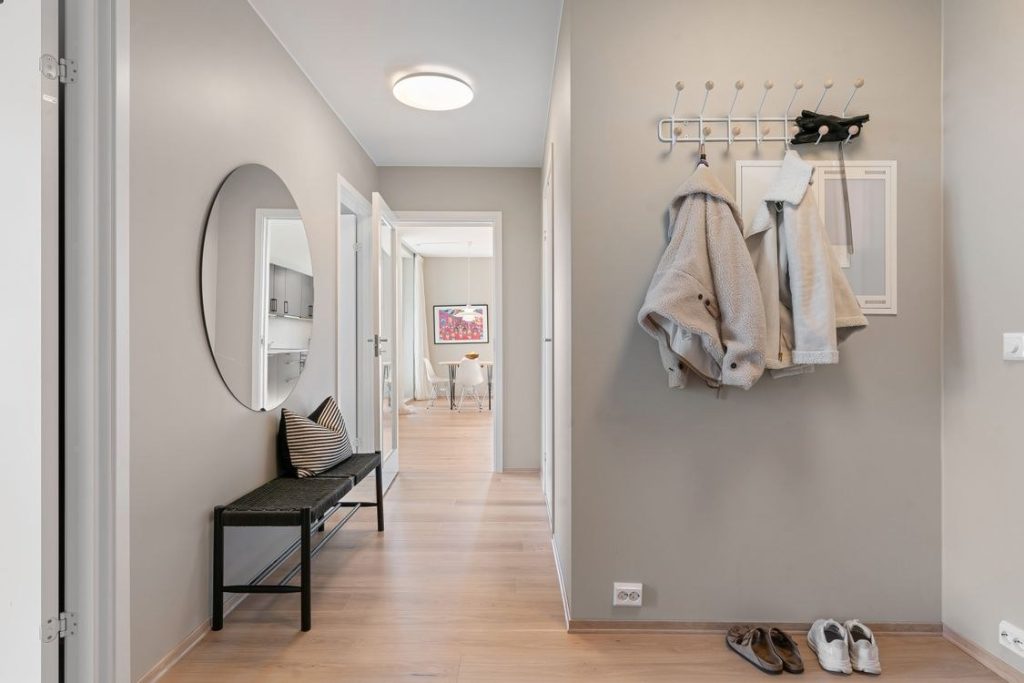
Your entryway is the smallest room in the house, and it does the biggest job. In a few square feet it has to hold coats, shoes, bags, keys, mail, umbrellas and whatever the kids dropped on their way in. No wonder it is usually the first place to look messy, even in a house that is otherwise tidy.
The good news is that you do not need a remodel to keep your home entryway tidy. You need two things: a clear home for everything that actually lives by the door, and a short daily reset that puts things back. Five minutes a day is enough, once the system exists. This guide builds both, using the reset method from HomeCleanSecrets, the zoning approach from DeclutterJoy and the setup steps from MacantaInteriors. More guides like this one live in our Lifestyle section.
Key Points
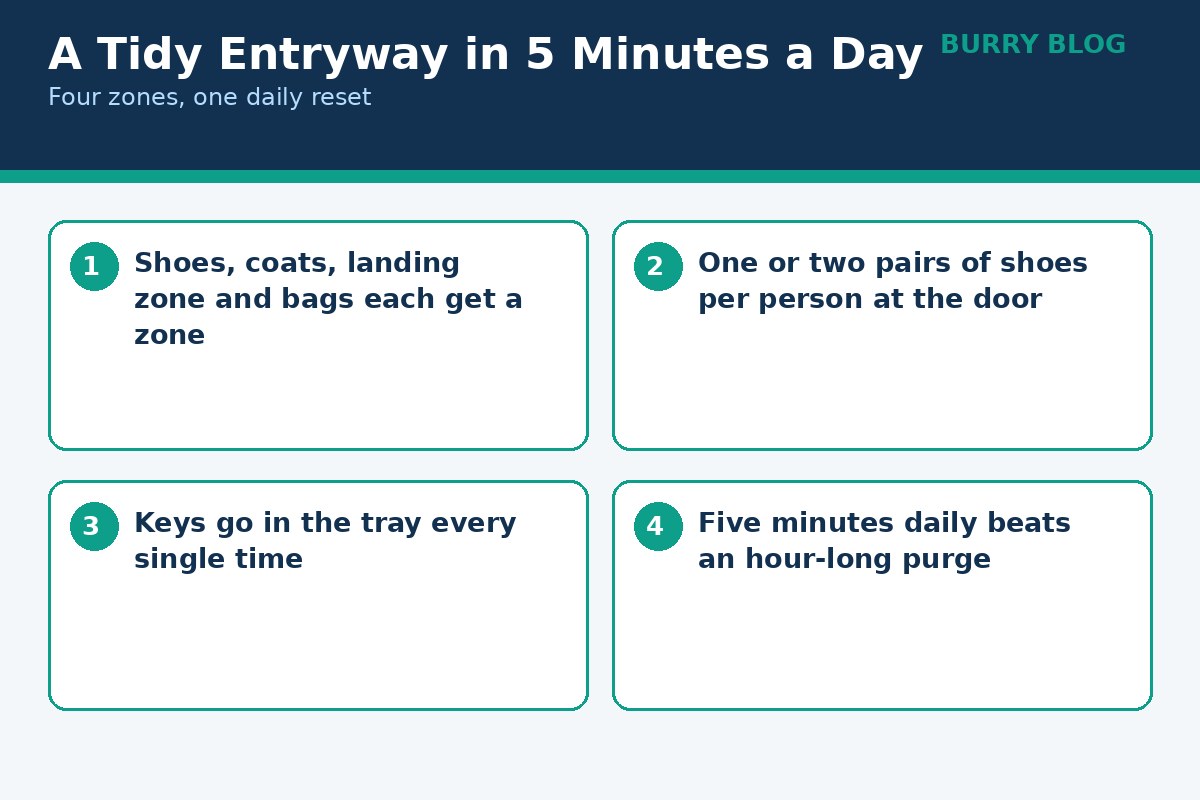
- An entryway stays tidy with four zones (shoes, coats, landing spot, bags) and a five-minute daily reset, not a remodel.
- Start with a 20-minute edit: keep only what is used daily or weekly at the door.
- The five-minute reset runs floor upward: shoes, coats, bags, keys, mail, then the walking path.
- Limit shoes to one or two pairs per person, and give keys one permanent home in a tray.
- A fifteen-minute weekly reset plus a twenty-minute seasonal rotation twice a year stops the pile coming back.
In This Guide
- Start With a 20-Minute Edit, Not a Shopping Trip
- Give Every Arrival a Zone
- How to Keep Your Home Entryway Tidy in 5 Minutes a Day
- Shoes: The One Limit That Changes Everything
- Keys, Mail and the Landing Spot
- The Weekly Reset and the Seasonal Swap
- Small Entryways and Rentals
- Mistakes That Undo a Tidy Entryway
- Frequently Asked Questions
Start With a 20-Minute Edit, Not a Shopping Trip
The mistake most people make is buying storage first. A bench, a rack and a basket will not fix an entryway that holds things that do not belong there, and the wrong furniture wastes the one thing you cannot buy more of: floor space. The first step to keep your home entryway tidy is an edit, not a purchase. DeclutterJoy makes the same point in its entryway guide: before you buy anything, empty the entryway completely.
Take everything out and sort it into three piles. The first pile is things that belong at the door and get used weekly: today’s shoes, the coat you wear now, your keys, your bag. The second pile is things that belong somewhere else in the house: a board game, library books, a bag you meant to return to a friend. The third pile is things that belong nowhere anymore. You will be surprised how much of the pile is in the second group.
Be honest about shoes and coats too. Most households only wear a few pairs of shoes regularly, and only one or two coats per person in a given season. The rest can live in a bedroom closet until their season comes around.
Give Every Arrival a Zone
An entryway works when each thing has a zone, not just a spot somewhere near the door. Think about the sequence of coming home. You take off your shoes. You hang your coat. You put down your keys and bag. You deal with the mail. Each of those steps deserves its own small zone. Zones are what keep your home entryway tidy between resets, because when every item has a zone, putting things away takes no thought, and that is exactly why it sticks.
| Zone | What lives there | The rule that keeps it working |
| Shoe zone | One or two pairs per person, on a rack, tray or shelf low by the door | Only the pairs worn this week; the rest live in a closet |
| Coat zone | Current-season coats and bags, on hooks at adult height | One hook per person, plus a lower row for kids |
| Landing zone | Keys, wallet, sunglasses and today’s mail, on a tray or small shelf at hand height | Keys go here every single time, no exceptions |
| Bag zone | One hook or basket per person for school, work and gym bags | Bags are parked, then emptied, never left to breed paper |
The landing zone is the one people skip, and it is the one that saves the most time. Lost keys are almost never a memory problem. They are a home problem. Keys end up in coat pockets, on kitchen counters and in bags because there is no one obvious place for them. A small tray or a hook rail right where you walk in, at hand height, fixes that in a day. Make it the only place keys ever go, and the morning search disappears.
How to Keep Your Home Entryway Tidy in 5 Minutes a Day
This is the core of the whole system, and it is deliberately boring. A reset is different from organizing. Organizing decides where categories belong and how much space each one gets. Resetting uses those decisions. The five-minute reset restores the path and the most visible daily-use zones, and it works from the floor upward, so you remove trip hazards before spending time on small details.
Start with the shoes. Return active pairs to the rack, tray or cubby, pair them together, and turn loose soles or toes inward so they do not project into the walkway. Then hang coats and park bags: dry coats to their normal hooks, backpacks, purses and work bags to their assigned spots, and if a hook is already overloaded, do not stack another heavy item on it. Next, return keys to their permanent home. Take them out of pockets, bags, counters and tables and put them in the tray.
Then move loose mail to its intake or next destination. Gather envelopes, flyers and school notices, recycle obvious junk, and put action items into the small intake holder. Finally, clear outgoing clutter and the walking path: return packages, donation bags, reusable totes, umbrellas and cords to their spots, or at least out of the traffic line. That is the whole reset. HomeCleanSecrets puts it at five minutes, and MacantaInteriors agrees, recommending it before bed or when you get home, with a phone alarm until it becomes a habit.
Do it once a day, at the same time, and the pile never gets big enough to feel hopeless. That is how you keep your home entryway tidy without a monthly purge: a daily five-minute reset beats a monthly hour-long purge every time, because the work stays small and the system stays visible.
Shoes: The One Limit That Changes Everything
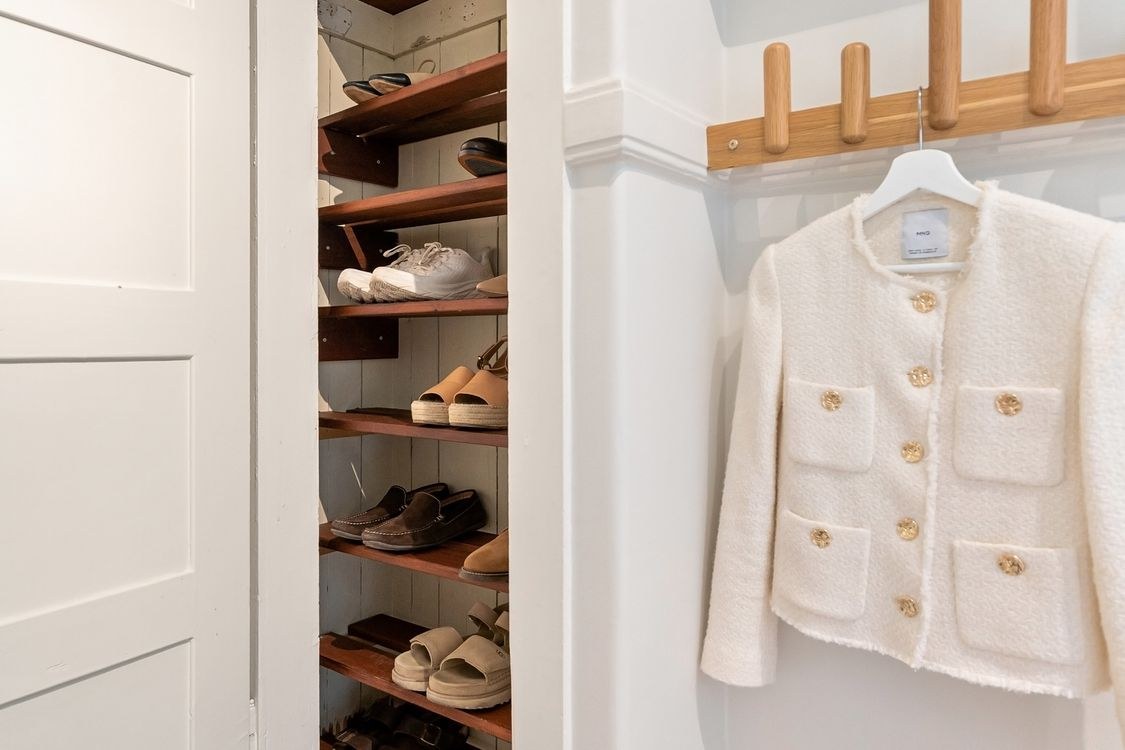
Shoes are what make most entryways look chaotic, because they multiply fast and they are bulky. The fix starts with a limit, not a bigger rack. Each person gets one or two pairs at the door: the pair they wear today and the pair they wear most often. Everything else lives in a bedroom closet. A limit is the simplest way to keep your home entryway tidy, because if several pairs do not fit without stacking or spilling forward, the answer is to choose the pairs actually used this week and move the rest to overflow storage.
For the pairs that stay, choose storage that fits how your household actually behaves. An open shelf or a low rack works for people who kick shoes off and walk away, because there is no door to open and no lid to lift. A closed cabinet looks tidier and keeps dust and pet hair off shoes, but it only works if the household will actually open it every time. A boot tray under an open rack catches wet shoes in rainy months. Measure your tallest boots before you buy anything, because a rack that fits sneakers but not winter boots will fail the first time it rains.
One more detail from the morning side of the routine: the shoes you reach for on a walk should live at the door, not in a bedroom closet. Our guide to starting a morning walk habit makes the same point about removing friction. If the shoes are already there, the walk happens. If they are upstairs, it often does not.
Keys, Mail and the Landing Spot
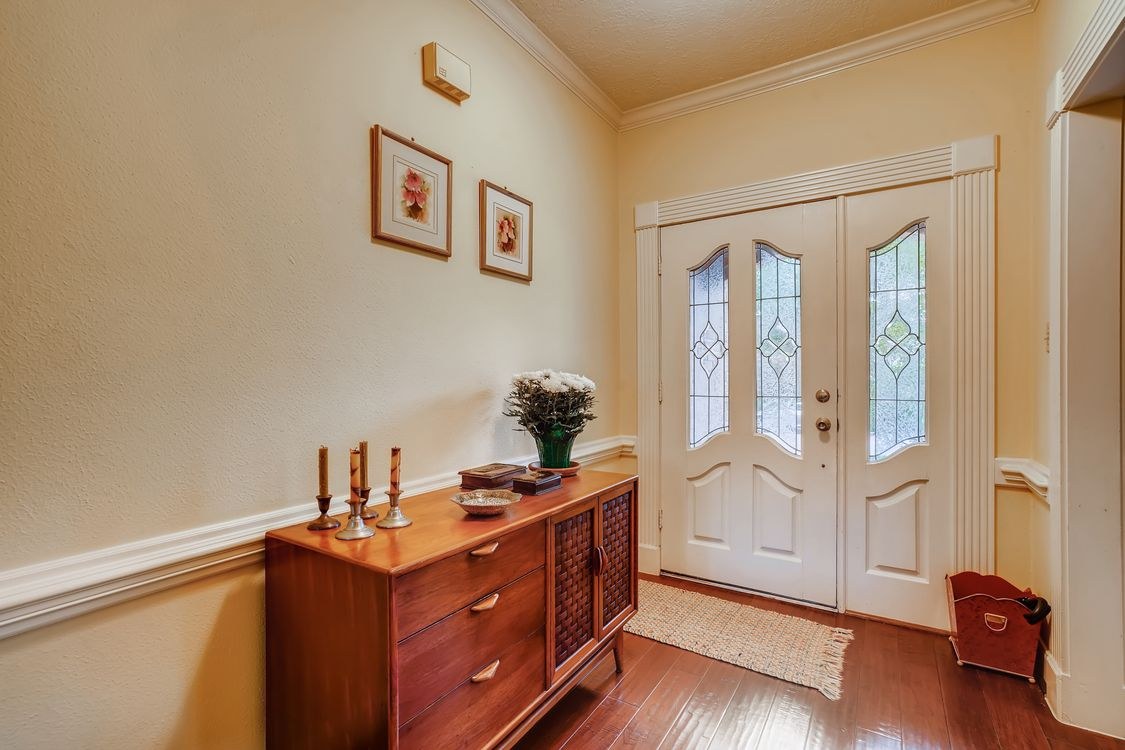
Small items can overwhelm a landing surface faster than larger categories, because they have no obvious visual limit. The reset here is focused on return and routing rather than storing every small object by the door, and that discipline is what helps keep your home entryway tidy on busy mornings.
Mail needs its own rule too. Sort it at the door, not on the kitchen table. Junk mail goes straight into recycling. Bills and letters to answer go in one basket or file, and everything else gets dealt with or filed the same day. A single basket for incoming mail stops the pile that grows on every flat surface near the door.
If the table fills every few days, clear it to its intended few items and watch what keeps returning. A second basket may hide the problem without solving it. The tray should be large enough to hold your typical daily items but not so large that it becomes a dumping ground.
The Weekly Reset and the Seasonal Swap
Five minutes a day handles daily drift, but slow buildup needs a longer look. Once a week, spend fifteen minutes on the things the daily reset skips. Empty the catch-all basket and return gloves, sunglasses, coins, receipts and chargers to their real homes. Shake or vacuum the mats, sweep the floor edges where grit collects, wipe the entry table, and clean the shoe tray. Lift the mats and check the surface beneath them for trapped dampness, and look at hooks, baskets and cubbies for overload. The weekly reset is the backup that helps keep your home entryway tidy when the daily five minutes slip.
Twice a year, do a seasonal rotation, which takes about twenty minutes and prevents the whole pileup. In late fall, move sandals and light jackets to a bedroom closet and bring out the heavy coats, boots and umbrellas. In spring, reverse it. Keep one umbrella per person at the door, in a stand or a tall basket, and store the extras elsewhere. The rotation is the same seasonal swap we use for a capsule wardrobe: out-of-season items leave the active space, current-season items take their place, and nothing doubles up.
Small Entryways and Rentals
A small entryway can still work, but it has to be honest about its size. If you have no foyer at all, just a wall beside the front door, that wall is your entryway. A row of hooks, a slim shelf above them, and a shoe rack that fits under a bench or a console is a complete system. A mirror on the entry wall bounces light around and gives you a last look before you leave. Renters can still keep their home entryway tidy without drilling a single hole: adhesive hooks hold coats and bags, a freestanding rack takes the shoes, and a bench you can carry with you when you move does the rest.
In a studio or a one-bedroom apartment, the entryway has to share space with the living room. Use a rug to mark the boundary. Shoes stay on the rug, bags stay on the hooks above it, and nothing from the entryway drifts past that line. A rolling basket can hold shoes if you have no floor space for a rack at all. Measure the space first, and always leave at least 90 centimetres of walking room, so the area never feels cramped.
Furniture costs stay modest. DeclutterJoy’s guide puts wall hooks plus a shoe shelf at 20 to 80 dollars, a storage bench at 80 to 250, a slim console plus tray at 60 to 180, and a closed shoe cabinet at 100 to 300. Spend money only where it changes daily life: a sturdy hook rail that will not pull out of the wall is worth paying for, and so is a boot tray that actually contains water.
Mistakes That Undo a Tidy Entryway
Four mistakes undo the system faster than anything else. The first is buying furniture before the edit. You will buy the wrong size and fill it with things that do not belong at the door. The second is no limit on shoes or coats per person. The entryway fills up, and the system fails no matter how nice the furniture is. The third is one big basket for everyone. It becomes a digging pit, and shoes go missing in pairs. The fourth is no landing spot for keys and mail. Small things scatter, and mornings start with a search. Avoid these four mistakes and you will keep your home entryway tidy with less effort than a monthly purge ever took.
The fix for all of them is the same. Keep the footprint small, go vertical, give everything one home, and reset it for five minutes a day. Take a photo of your entryway right after organizing and compare it monthly. Visual evidence helps you spot subtle clutter that you might otherwise miss, and a monthly review of a few minutes keeps the system honest.
A good entryway does not ask much of you. It asks for a home for each thing, a limit on how much lives there, and five minutes a day to put things back. That is all it takes to keep your home entryway tidy. Start with the edit, zone the space by what you do at the door, and let the furniture follow the habits you actually have. Coming home will feel calmer, and leaving in the morning will be faster.
Frequently Asked Questions
How do I organize a small entryway with no closet?
Use the wall beside the door. A row of hooks, a slim shelf, and a low shoe rack or bench is a complete system. A rug marks the boundary, and a mirror makes the space feel larger. Keep only the items you use daily or weekly at the door.
How many pairs of shoes should stay at the front door?
One or two per person. The pair worn today and the pair worn most often. Everything else belongs in a bedroom closet, brought out only when the season or the activity calls for it. A boot tray under the rack catches wet shoes in rainy months.
What is the best shoe storage for an entryway?
It depends on your household. An open rack works best for people who kick shoes off and walk away. A closed cabinet looks tidier but only works if everyone opens it every time. Measure tall boots before buying either one, because a rack that fits sneakers but not winter boots fails the first time it rains.
How do I stop mail from piling up in the entryway?
Sort it at the door. Junk mail goes straight to recycling, and the rest goes in one basket or file. Deal with that basket once a week, and the pile never reaches the kitchen table. Keep the intake holder small enough that it must be emptied regularly.
How often should I declutter my entryway?
Do a quick reset daily, a five-minute tidy that puts everything back in its zone, and a full seasonal rotation twice a year. Add a fifteen-minute weekly reset for mats, trays and surfaces. That rhythm keeps the space working without a big overhaul.

Written by Fatima Noor
Fatima writes education, lifestyle and how-to guides for Burry Blog readers. Her focus is clear steps and practical detail: the things readers actually need to get something done.